
活動報告
2026年09月10日
Mavin De Silva, final-year student in the WISE Program (GD5) successfully completed Research Internship on Developing an Agent-Based Model of EV Charging Behavior at the University of Tokyo
Mavin De Silva, final-year student in the WISE Program (GD5) successfully completed Research Internship on Developing an Agent-Based Model of EV Charging Behavior at the University of Tokyo M. Mavin De Silva, a student in the WISE Program at Nakayama Laboratory, completed a collaborative research internship at the Sekimoto Laboratory, Center for Spatial Information Science (CSIS), The University of Tokyo, as part of a five-month split research program connecting New York University (NYU) and The University of Tokyo. The research stay represents a continuation of Mavin’s ongoing collaboration with Professor Takahiro Yabe at the Center for Urban Science and Progress (CUSP), New York University, and extends the first phase of his research on the socio-economic impacts of electric vehicle (EV) charging infrastructure. While the earlier phase focused on causally quantifying how EV charging stations influence nearby commercial activity, the current phase advances the research toward understanding how individual EV users make charging-station choices and how these decisions collectively shape charging demand across an urban area. During his stay at The University of Tokyo, Mavin worked on a research project titled “Developing a Behaviorally Grounded Agent-Based Model of EV Charging Station Choice and Urban Charging Dynamics.” The primary objective was to develop an Agent-Based Model (ABM) capable of representing heterogeneous EV users and simulating their charging-station selection behavior under different travel, charging, and urban-environment conditions. The research conducted at Sekimoto Laboratory provided an important opportunity to combine urban spatial information science, behavioral modelling, causal inference, and agent-based simulation within a unified research framework. The collaboration between Nakayama Laboratory of Nagaoka University of Technology, The University of Tokyo, and New York University also establishes a strong foundation for future research on EV charging infrastructure, human mobility, and sustainable urban transportation systems. This collaborative research program represents an important step toward building a longer-term research partnership between the three research groups and developing new interdisciplinary approaches for understanding how emerging transportation technologies interact with cities, businesses, and individual travel behavior.
概要
卓越大学院プログラムGD5年Mavin De Silvaさん(中山研)が東京大学にて「EV充電行動のエージェントベースモデルの開発・研究」というテーマでプロジェクトリーダー反復実習を行いました
卓越大学院プログラムGD5年Mavin De Silvaさん(中山研)が2026年4月1日から7月31日までの約4ヶ月間、東京大学空間情報科学センター(CSIS)の関本研究室にてプロジェクトリーダー反復実習を行いました。今回の研究滞在は、ニューヨーク大学都市化学・シンポセンター(CUSP)の矢部隆弘教授との継続的な共同研究の一環であり、電気自動車(EV)充電インフラがもたらす社会経済的影響に関する研究の第1段階をさらに発展させるものです。 前期の研究では、EV充電ステーションが近隣商業活動に与える影響を因果関係に基づいて定量化することに焦点を当てていましたが、今回の段階では、個々のEV利用者がどのように充電ステーションを選択するか、そしてそれらの決定が集合的に都市圏全体の充電需要をどのように形成するかを理解する方向へと研究を進めています。 東京大学滞在中、彼は「行動理論に基づいたEV充電ステーション選択および都市部の充電動態に関するエージェントベースモデルの開発」と題する研究プロジェクトに取り組みました。その主な目的は、多様なEVユーザーをモデル化し、さまざまな移動、充電、都市環境の条件下における充電ステーションの選択行動をシミュレートできるエージェントベースモデル(ABM)を開発することでした。関本研究室で行われたこの研究は、都市空間情報科学、鼓動モデリング、因果推論、およびエージェントベースシミュレーションを、統一された研究枠組みの中で統合する重要な機会となりました。長岡技術科学大学の中山研究室、東京大学、ニューヨーク大学との共同研究は、EV充電インフラ、人の移動、持続可能な都市交通システムに関する今後の研究のための強固な基盤を築くものでもあります。 この共同研究のプログラムは、3つの研究グループ間の長期的な研究パートナーシップを構築し、新興の交通技術が都市、企業、および個人の移動行動とどのように相互作用するかを理解するための新たな学際的アプローチを開発するうえで、重要な1歩となるものです。
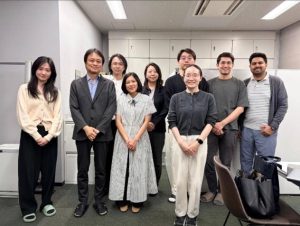 Figure 1: After presenting at Sekimoto Lab Meeting |
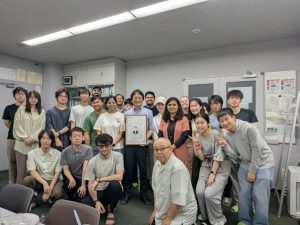 Figure 2: Celebrating Sekimoto Sensei’s Birthday |
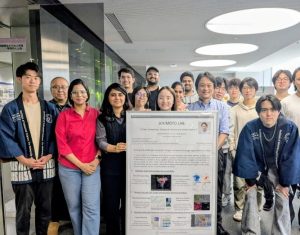 Figure 3: Participating in Komaba Open Campus |
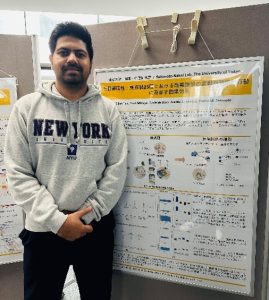 Figure 4: Presenting a Poster in Komaba Open Campus |